|
$$PLAIN_TEXT_PREVIEW$$
|
Hello, welcome to the sixth issue of the Flourishing Spaces Newsletter~ a small offering to pause as we begin the season of Autumn. Firstly, we would like to thank you for signing up to receive this gentle thread. We aim to connect a growing community committed to re-humanising medicine and education through creativity, reflection, and care. This isn’t about adding more noise to your inbox but some encouragement, a signpost to something meaningful, and a glimpse into what’s unfolding in our shared landscape. All previous newsletters can be read here (scroll to the bottom of the page).
|
|
“Often, doctors are seen not to be human. They are expected to conform to a system and meet robotic unrealistic standards. At the same time, I realised that on the contrary -a doctor is present at a patient’s most vulnerable and pivotal moments and that the constant face of suffering helps one understand what it truly means to be human.” — The ups and downs of being a medical student by Benita (Finding Meaning in Healthcare: Looking Through the Hermeneutic Window, edited by Rupal Shah and Robert Clarke, 2025)
|
|
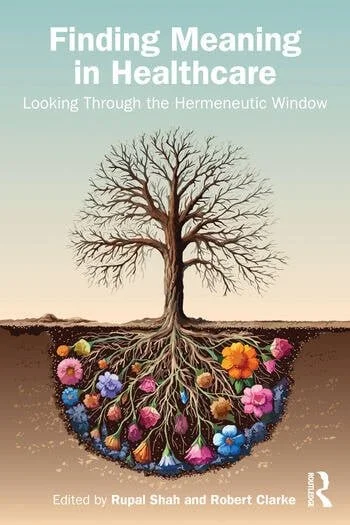
A publication in the field Finding Meaning in Healthcare: Looking Through the Hermeneutic Window was published on August 29th, 2025. This book illustrates the ways in which an interpretive or hermeneutic stance can be incorporated into modern healthcare across clinical practice, clinical ethics, education and leadership – and the transformative effects of doing so. |
|
|
|
Chapters from this book touch on: multimorbidity, social injustice, mental health and chronic pain, leadership, medical education, practical wisdom, flourishing spaces and thinking beyond the clinical encounter. “Creating a flourishing space requires a different kind of thinking to the thinking that has created our neoliberal spaces. I have created a ‘toolkit’ to support educator thinking about creating flourishing spaces for students, clinicians, patients, denoted with the acronym ASK… (Attend, Share stories and Shadow work and Kindle hope). The acronym also highlights the importance of asking. We may need to ask for space for our needs as humans and to have the courage to ask for help when we are struggling. “ — from ‘Flourishing Spaces’ chapter Find out more about the book here.
|
|
Keynotes on Flourishing Spaces in Glascow and Keele
|
|
It has been a busy few weeks for the Flourishing Spaces team, with keynotes in Glasgow, at the RCGP Midlands event, and at the Keele School of Medicine Education Conference, 2025. Each session concluded with a co-created poem on the theme “At work I feel cared for when…”, completed live by participants on Mentimeter. See these LinkedIn posts for the full poems: click here for Keele, click here for Glascow. 💡 The themes are often very similar up and down the country. We feel cared for when we are brought cups of tea, when we feel part of a team, when people ask how we are and really mean it, when they use our names, when they help us when we are having a tough day and when we feel seen, heard and valued.
|
|
Student-educator team at the RCGP Annual Conference
|
|
A student-educator team has created a new postcard to illustrate the work of the RCGP/NCCH Creative Health Special Interest Group. This group recognises the shared human dimension across the patient, the student and the clinician, and how creativity enables engagement with our fragments of stories, lived experiences and reflections. The postcard will be shared at the upcoming RCGP conference in two weeks. Special thanks to Alice Hewett for the postcard design.
|
|
|
|
Join research exploring UK Healthcare Workers’ Working Lives and Wellbeing by Olga Lainidi The study is looking for participants, especially working in busy or high-pressure healthcare environments (including shift work). Your perspectives are vital to understanding how day-to-day experiences of voicing your thoughts and concerns affect well-being.
|
|
|
|
|
|
|
📩 Contact: o.lainidi@leeds.ac.uk 📝 What’s involved? A one-time baseline questionnaire (approx. 15 mins) and a short daily diary (5 mins) for 7 days; People find that pausing to reflect can be helpful or even cathartic. By taking part, you may gain insight into your daily experiences, and your input will contribute to research aiming to improve communication and wellbeing in healthcare. More details and sign-up here (scroll to the bottom of the page).
|
|
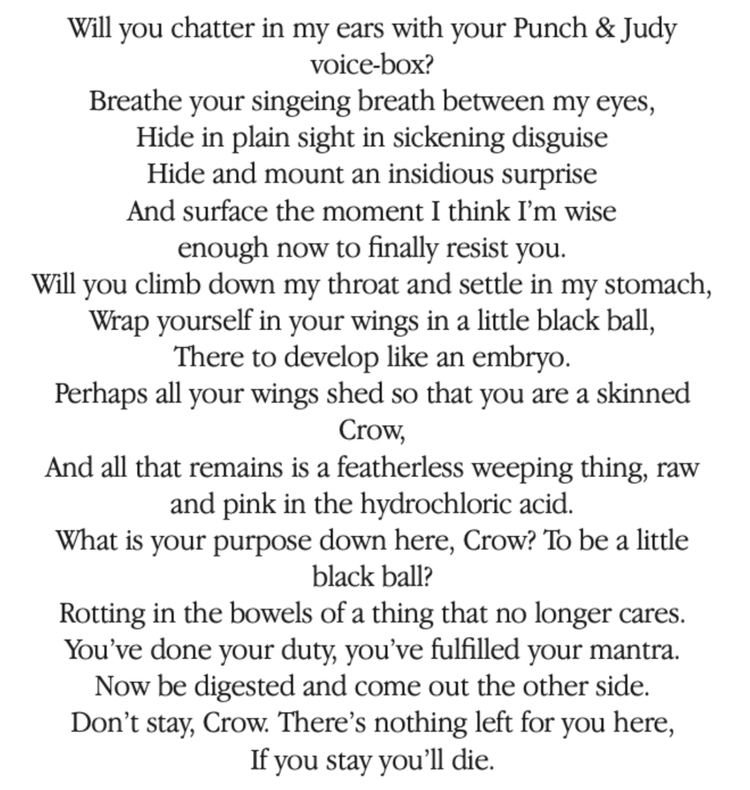
The Crow by George Lyons (Read from left to right, and then the final paragraph at the bottom)
|
|
“My poem presents the relentless internal voice of anxiety as a crow. Whilst this voice is so often overwhelming and frustrating, like the crow personified it is also magnificent and beautiful. This beauty can be found through an appreciation of the thought mechanisms underlying anxiety, which when overcome or elucidated through therapy can provide great insight into a patient’s own character - fostering a new found sense of self-awareness and appreciation of the human mind. This depth and complexity as a part of the mind is the undeniable beauty of the crow; its hostility is the animalistic repetition that ,if allowed to, will consume someone in their own thought mechanisms. Towards the end of the poem the speaker, having recognised the crow as an intrinsic defence mechanism and an irreplaceable part of their own psyche, expresses appreciation: “I care for you, crow, you’re just doing the only thing you know.” This self-compassionate insight can be crucial where mental illness - as it so often does - preys on feelings of guilt and doubt. The speaker realises that the crow is a harmful part he cannot rid himself of until he resolves not to feed it anymore. This is a pertinent metaphor in the treatment of anxiety disorders: how we encourage patients to approach behaviours instigated by their illness. Art and creativity are vital in the treatment of mental illness. Far from being just another therapeutic technique to vent emotion, they offer a person insight into their own condition and the potential for flourishing and deeper purpose.” — George Lyons, Third year medical student, Barts and The London School of Medicine and Dentistry, QMUL Read the full reflection in Journal of Holistic Healthcare, Volume 22, Issue 2, Summer 2025.
|
TRY IT OUTCollaging to visualise your mind
|
|
|
|
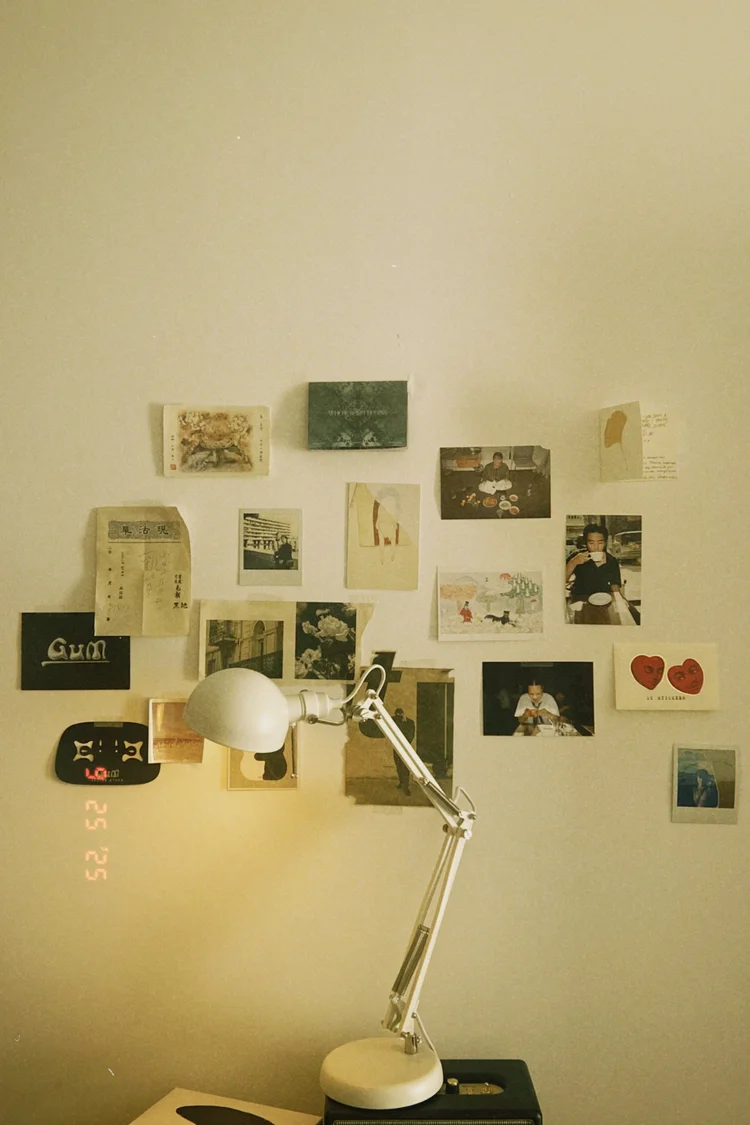
The collages on my walls move, grow and evolve with me as I begin life again in a new place, and there has been many of these new starts especially during my time at medical school. Last week I realised that despite having lived in my current flat for over a year, the bedroom walls were blank and calling for a tapestry of life. I gathered some post cards I had by my desk, one from my recent trip to Eastbourne, and one sent by a penpal. I found an exhibition invitation which had a Blue bird on it, the title of my recent favourite song, and I took a page out of a magazine I had enjoyed reading that day. This constellation that represented the joy from my recent days is on the wall opposite my bed, and a feeling of a flourishing space is created as I see it first thing in the morning. — Newsletter editor Elle Tallgren, 5th year medical student
|
|
|
|
|
|
Creating a collage: Gather some receipts, postcards, a business card, perhaps some of your magazines that wouldn’t mind a ripped page or two. Organise a constellation on your table that represents you, in this moment or in the past. Glue it on a blank sheet of paper, or if you’d like a bit of room decoration, put it on your wall. …I reminded myself of all the collages I have done in life. It comes to me so easily, a chance to express multitudes. |
|
|
|
|
“Patients need doctors (and other healthcare professionals) who can remain present when the instinctive urge is to run away. We must learn how to suffer, and in so doing learn how to become more compassionate, because compassion means being with suffering and being moved to do something about it. “ — Jonathan Tomlinson, GP (“The Abject”, Journal of Holistic Healthcare, Volume 22, Issue 2, Summer 2025)
|
|
If there’s something stirring for you after reading this, or if you simply want to say hello, we’re always here, just email us at creativeenquiry@gmail.com. We will see you again in the next newsletter, which is due to be published on the last Friday of October. With warmth, The Flourishing Spaces Team ———————————————————————————— FLOURISHING SPACES
|
|
|
|