|
$$PLAIN_TEXT_PREVIEW$$
|
Hello, welcome to the twelfth issue of the Flourishing Spaces Newsletter~ a small offering to pause as we approach the warmer days of spring. This issue officially closes a year of newsletters. Thank you for reading! We aim to connect a growing community committed to re-humanising medicine and education through creativity, reflection, and care. This isn’t about adding more noise to your inbox but some encouragement, a signpost to something meaningful, and a glimpse into what’s unfolding in our shared landscape. All previous newsletters can be read here (scroll to the bottom of the page). ___________________________________________________________________
|
|
“During our first session of the creative arts student selected component (SSC), I was introduced to the term imposter syndrome. It was the first time I had heard the term and I immediately resonated with it. It’s so common among medical students, yet unspoken. And so I had been feeling like I was the only one having these thoughts and feeling: like everyone around me was doing much better than me. However as soon as we started talking openly about it I discovered we all had the same feeling.” — Sami Akhtar Bibi
|
|
___________________________________________________________
|
|
|
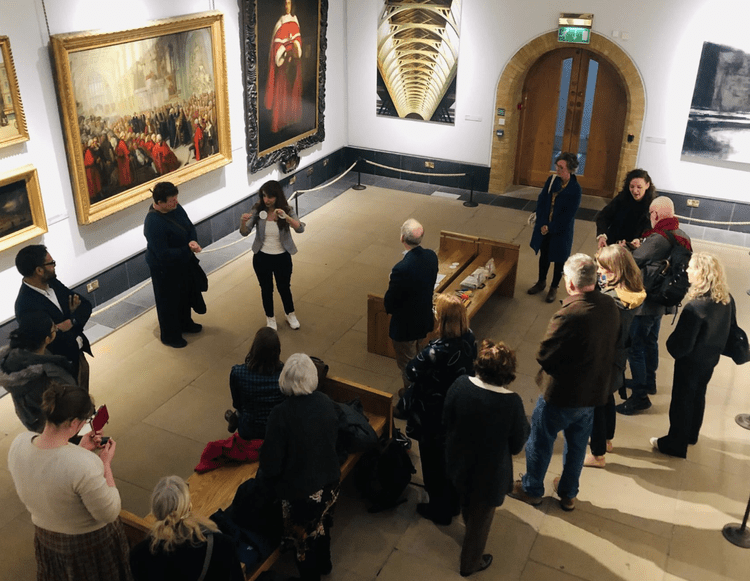
Attendees of Muse Meets Medicine at the Guildhall Art Gallery Image credit: Megan Tjasink |
|
|
16-17th of March: Muse Meets Medicine The Muse Meets Medicine festival brought together clinicians, artists, educators, patients and students for two inspiring days exploring the human dimension of healthcare, and discussing the role of the arts in medical education and wellbeing in clinical work.
|
|
|
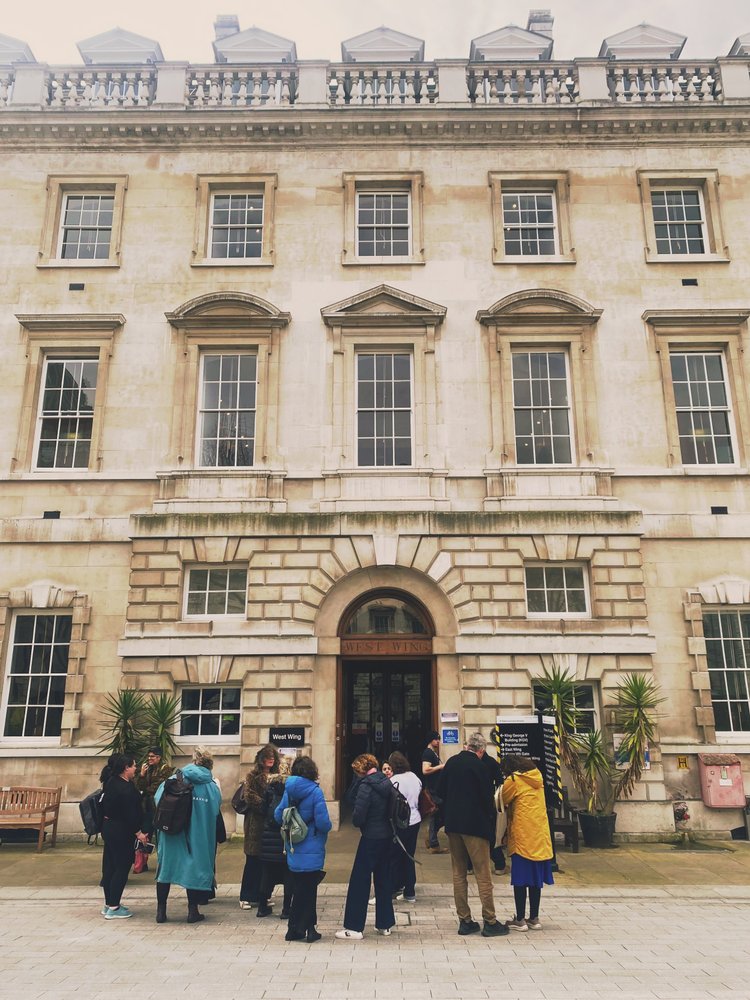
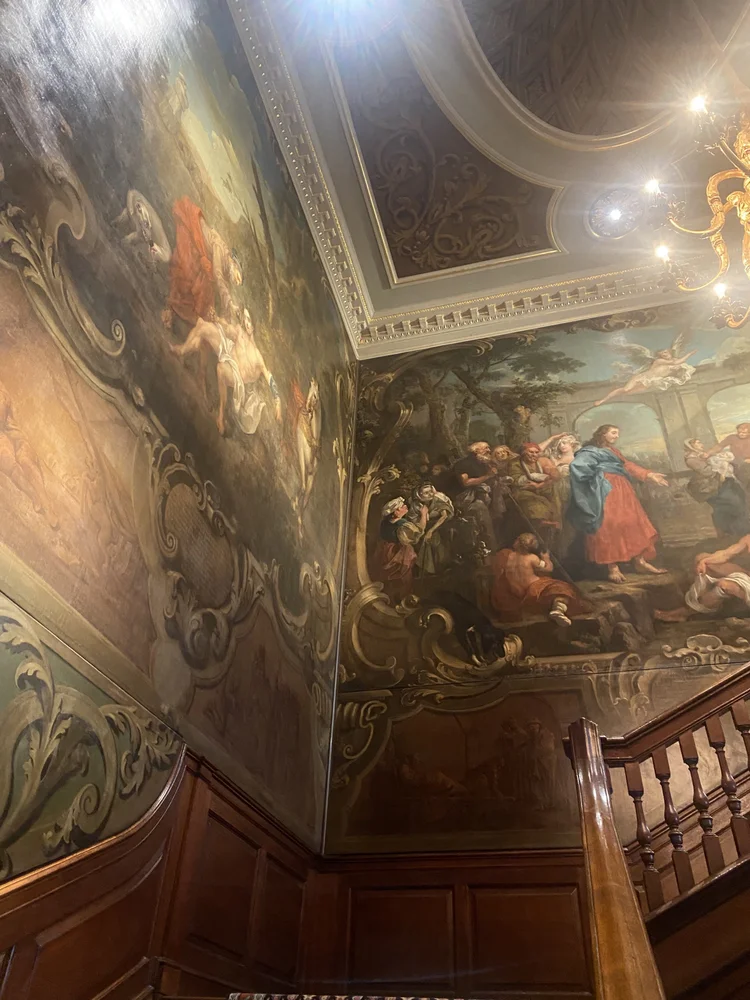
Set against the historic backdrop of St Bartholomew’s Hospital, including its pathology museum and restored Hogarth murals of the recently re-opened North Wing, the festival drew on a rich legacy of arts and medicine.
|
|
|
|
|
|

|
This photograph captures Professor Charles Knight, Chief Executive of St Bartholomew’s Hospital, delivering a keynote exploring the hospital’s history through a series of artworks. |
|
|
|
|
Blending medical pedagogy with insight from the arts, the festival created space for reflection and creative exploration of a multitude of themes. Feedback from attendees captured the spirit of the event: inspiring, collaborative, reflective and connecting. What stood out most was the sense of community: a coming together of individuals from across the world, now connected through a shared commitment to creativity in healthcare. Both days ended with an invitation to reflect on the shared experience in the beautiful Great Hall of the North Wing, with a dinner on Monday, and a concert on Tuesday. A big thank you and congratulations to Dr Giampaolo Martinelli, Prof. Louise Younie, Dr. Giskin Day, Prof. Christine Bentley and Megan Tjasink for organising such an impactful festival and a flourishing space for all attendees. More information on the event can be found here. A wonderful reflection on the event can be read here.
|
|
|
A collaborative illustration from the final hour of the festival, a metaphor of the human dimension being at the core of medicine with other key components helping to build a flourishing web: playfulness, accepting messiness of clinical medicine, gray vs. black&white thinking, accepting our flaws, and supporting each other. |
|
|
__________ Events by Creative Clinic
|
|
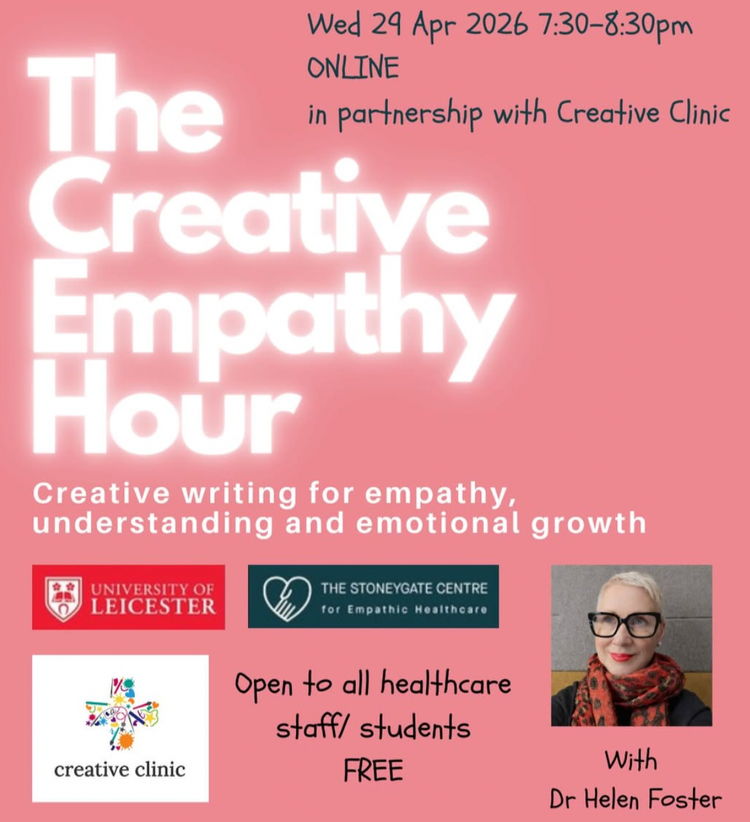
Online Creative Headspace Workshops: A series of three online workshops designed to support wellbeing and creativity for healthcare professionals and students. Led by Katrina Whalley (GP), these sessions offer a reflective, creative space to pause, reset, and reconnect. 📅 Dates: 13 April, 18 May, 15 June 2026 ⏰ Time: 7–8pm The Creative Empathy Hour: A free online creative writing session exploring empathy, understanding and emotional growth in healthcare. Led by Helen Foster, this reflective workshop offers a supportive space for healthcare staff and students to connect through creativity. 📅 Date: 29 April 2026
⏰ Time: 7:30–8:30pm
Click on the images below to read more and sign up!
|
|
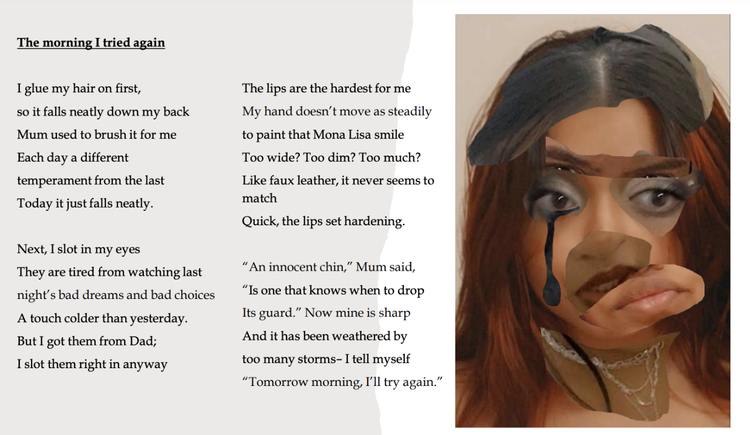
Naimaah Ahmed- The morning I tried again
|
|
“Burnout is a habit, caused by the repetition of exhaustion and resilience, without taking the time to have a break. For me, burnout also comes hand in hand with cultural and societal pressures, all compiling into an incessant need to be more and be better, no matter the outcome…I was suddenly someone who didn’t know the difference between what I wanted and what others wanted from me. To untangle this web, I turned to poetry, an art form I often turn to in times of need. It was also important for me to visually represent my poetry because I wanted to share my experience in a new form I had never tried before. I only used images of myself, and I pieced them together to accomplish a beautiful but haunting version of me. The act of collaging this image mirrors the actions in the poem itself- I cut out the eyes and lips and plaster them on but overall, there is something not quite right…”
|
TRY IT OUTA note from the editor: Art accepts change
|
|
|
A few days after finishing my final medical school exams, I attended Muse Meets Medicine, a two-day festival featured earlier in this newsletter. It was a timely reminder of what I love most about medicine~ not the endless revision and soulless question banks that defined the past few months, but its human dimension: the conversations about living and helping others to live, the themes that connect practice across disciplines, and its deep connection to art and history.
|
|
|
|
|
|
|
|
Among the many wonderful workshops I attended, I’d like to share thoughts from “Create, Destroy, Transform” led by Megan Tjasink. The process we were invited to explore was simple but powerful. We created something, then let it go, destroying what we had made, and used the remnants to build something new. I usually take photographs of my works, but this one remains seen only by my retinas. What I expected to feel uncomfortable instead became unexpectedly freeing. It offered a way to engage with change, not as loss, but as part of an ongoing creative process. As I wait for my exam results, on the cusp of finishing medical school, that idea feels especially resonant. In conversation with others, shared themes emerged. There was a quiet sense that, through creativity, we could practise navigating uncertainty with a little more openness and self-compassion. ~ Newsletter editor Elle Tallgren
|
Here is your invitation: Take a moment to create a sketch, a poem, a few lines of writing. Keep it simple and don’t overthink it. Let it go: tear it up, cross it out, or rearrange it. Notice what that feels like. Transform it: use the pieces to make something new, however small. Reflect: what changed? Did anything feel lighter, freer, or unexpected?
|
|

|
|
|
“Once you slow down, it is rather like being held deep in the canal lock for a moment, in that liminal space, until the water levels are exactly balanced. I would advocate and encourage self-care, regular reflection, life-coaching if needed, to be part of clinicians’ regular rhythms. To add pauses into our daily life. To talk, journal, make art in whatever way you choose. It is precisely these habits which sustain my clinical practice now, and will do into the future.” — Kathleen Wenaden, GP (From Lessons in stillness (from a canal-boat), Journal of Holistic Healthcare, Volume 20, Issue 2, Summer 2023) ~~~ I have shared a snippet of this quote before, but I find myself returning to it, hence sharing it in full this time. ______________
|
|
If there’s something stirring for you after reading this, or if you simply want to say hello, we’re always here, just email us at creativeenquiry@gmail.com. We will see you again on the last #FlourishingFriday of the month. With warmth, The Flourishing Spaces Team ———————————————————————————— FLOURISHING SPACES
|
|
|
|