|
$$PLAIN_TEXT_PREVIEW$$
|
Hello, welcome to the fifteenth issue of the Flourishing Spaces Newsletter~ a small offering to pause in the midst of summer. We aim to connect a growing community committed to re-humanising medicine and education through creativity, reflection, and care. This isn’t about adding more noise to your inbox but some encouragement, a signpost to something meaningful, and a glimpse into what’s unfolding in our shared landscape. All previous newsletters can be read here (scroll to the bottom of the page). ___________________________________________________________________
|
|
“At a time when our medical systems often feel overstretched and unsustainable, these experiences gave me hope that models of care rooted in community, holism and respect for the needs of the whole person can protect the wellbeing and humanity of both patient and clinician. Remaining compassionate in a medical career requires more than individual resilience and reflection. At a systemic level, structural change and a willingness to question dominant narratives around healthcare are needed.” — Chloe Jenvey, final year medical student (From ‘Remaining compassionate in a medical career – reflections from an elective grounded in holism’ - read the full article in the newest issue of Journal of Holistic Healthcare, Volume 23, Issue 1, Spring 2026. )
|
|
___________________________________________________________
|
|
Fairer practice conference in Manchester It was a privilege for RCGP Creative Health SIG leads Louise Younie and Nicola Gill to join colleagues from across the UK at the Fairer Practice Conference in Manchester, bringing together GPs at every career stage alongside nurses, educators, community organisations and people with lived experience. The day centred on a shared commitment to reducing health inequalities, with sessions exploring topics including poverty, women's health, adolescent care, learning disability, trauma-informed practice and creative health. One of the highlights was seeing so many GP registrars and early-career clinicians leading conversations and helping to build the Fairer Practice community. Throughout the day, lived experience remained at the heart of every discussion, while creative enquiry sessions offered space to pause, reflect and imagine new ways of making care fairer. It was an inspiring reminder that meaningful change begins by listening, learning and working together.
|
|
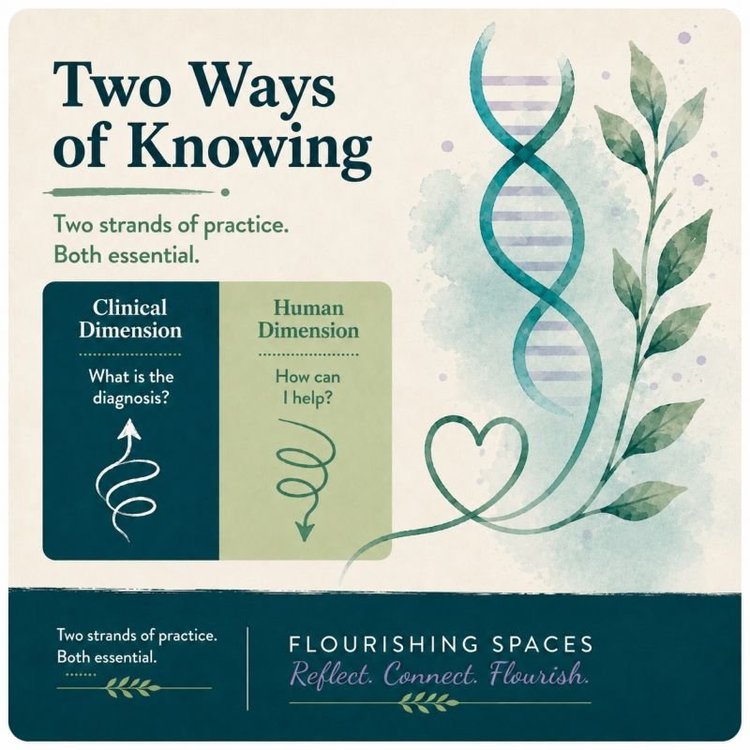
New blog on Human Dimensions of Healthcare Professor Louise Younie has begun a new blog series exploring the human dimensions of healthcare, which you can read about here. The blog post will come out on LinkedIn, and be archived on the Flourishing Spaces Website. You can access all the editions here. |
|
|
|
|
|
____________ Roy Alexander Briggs Prize This year’s Roy Alexander Briggs Prize attracted an outstanding group of student submissions, and we were hugely impressed by the quality of the work received on the themes of “unheard voices” and “acts of care”. The entries reflected real thought, creativity, and engagement, making this a particularly strong year for the prize. Our thanks and congratulations go to all the students who took part. See the Creative Enquiry section of this newsletter featuring one of the student submissions. ~~~ The Roy Alexander Briggs GP Prize is an annual award for medical students at Barts and The London School of Medicine and Dentistry, Queen Mary University of London (QMUL). Managed by the Community Based Medical Education (CBME) team, it focuses on integrating creative enquiry with primary care and general practice. Students submit creative projects (such as art, poetry, or writing) that explore profound human and clinical themes.
|
HUMAN DIMENSION, AI, FLOURISHINGPope Leo XIV has recently published the Magnifica Humanitas addressing issues at the forefront of @Flourishing Spaces thinking.
Key ideas include the centrality of human dignity, a call to value people over profit, and the risks posed by big tech and concentrated power when the needs of the most vulnerable are overlooked. It invites us to consider how flourishing is for everyone, and how technology and AI should serve this vision rather than define it. “Magnifica Humanitas gives renewed force to ideas that public health depends on but too often leaves implicit: dignity, solidarity, justice, the common good, and the protection of the vulnerable. Its value lies in reminding public health what is at stake when technical systems are allowed to define human worth.” — Quoted from: Correia T, Ricciardi W, McKee M. Human dignity, technology, and solidarity in a fractured world: why Magnifica Humanitas matters for public health. European Journal of Public Health. 2026
|
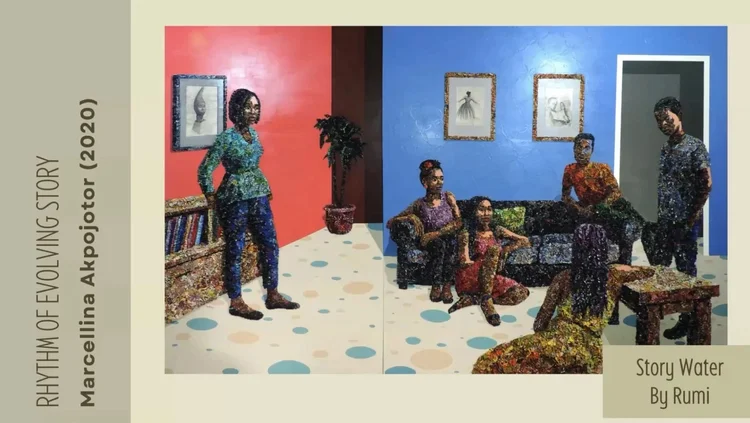
UPCOMING EVENTSNCCH Creative Health Webinars Our new Creative Health Webinars have begun, bringing together healthcare professionals, educators and students to explore the role of creativity in health and wellbeing. The next webinar, Flourishing in Challenging Times, will take place on 9 July. We'd love for you to join us, click here to sign up. A highlight from our first webinar: Nicola Gill left us with the recommendation to read the poem “Story Water” by Rumi and to look at the image and think about the following: What might be happening here? What might they be talking about?
|
|
_______ An upcoming conference The 12th European Conference on Positive Psychology (ECPP 2026) takes place in Dublin from 1–4 July 2026, with this year’s programme exploring a broad range of themes, including embodiedness, nature, regeneration, trauma, and the connection between the body and the mind. See here for more. _______ Event by Creative Clinic Evening of poetry- celebrating the publications of Elizabeth Osmond and Eleanor Holmes, Hatchery and #Moth respectively. During the evening, the authors will be reading from their new pamphlets, giving us a peek into their poetic worlds.
🕖 Monday 13 July from 7pm. Click on the image below to read more and sign up!
|
|
‘Before starting my placement, I imagined general practice would be defined by clear answers and structured decision-making. I expected consultations to move efficiently from symptom to diagnosis to plan. What I encountered instead was something far less linear. Consultations often began in uncertainty and stayed there longer than I expected. Tiredness, dizziness, poor sleep, “not feeling right”. Symptoms that did not immediately resolve into categories, but instead required time, repetition, and interpretation in real time.’ For more see here. — Dalila Marra, final year medical student
|
TRY IT OUTExploring outside of one’s creative identity
|
|
After spending five weeks travelling through Japan and China, I returned to London with a surprising realisation: it was the first time in more than a decade that I had completely stepped away from work. No emails, no writing, no projects ticking over in the background. It was a chance to see the world while in the liminal space of having finished medical school, and not yet starting my first clinical job. The perspective and contrast this trip offered grounded me in some new deep knowledge about how I’d like to continue living my life.
|
|
|
|
|
|
|
|
|
Like many people, I have found meaning, identity and purpose in my work. After experiencing burnout, I told myself I wanted to build a life that was slower and more sustainable, and I did exactly that, while completing the usual 5 year medical course in 6 years. Yet it's remarkable how easily we can become attached to productivity, even when we know the cost, and I had become slightly blinded by how full my plate was in those final months of medical school.
|
|
|
|
|
|
The unexpected gift of taking real time away was the rediscovering of space for my mind to return to itself. Ideas began to arrive unannounced, without deadlines or expectations attached to them, and my creative practice has started to shift with this. Rather than following rigid plans, I'm continuing my journaling practice with a little more freedom, following a thought when it appears instead of forcing one into existence. ~ Newsletter editor Elle Tallgren
|
|
Now it is your turn: Usually, in this section, I give clear instructions on trying out a method of creative enquiry, but this time I’d simply like to introduce an idea. If you have the opportunity, allow yourself some time away from work, maybe a day that has a boundary of no pressure to do anything at all. It is not the same as my privilege of 5 weeks, but maybe you can enjoy the wandering of your mind, and the feeling as it returns to thoughts that are possible to emerge only when you don’t expect them to.
|
|
In our health system we are effective at diagnosing pathology and creating problem lists to be managed. Of course, this is important. But to truly heal people, we must broaden our approach. Each of us has a profound nature to meet, each of us has strength, warmth to feel and light to offer. Each of us. We must help people reconnect and FEEL what is strong within and outside of themselves. Explore what is beyond disability, and into our abilities, innate and learnt. As Gabor Mate says "What does it mean to recover? It means to find it again". — Sam Manger, GP, drawing on words of Albert Camus. This quote is from a LinkedIn post, which you can read in full here. ______________
|
|
A note for future newsletters: our editor Elle is graduating next month, and starting her new job as an FY1 doctor. Due to this our newsletter will go on a summer holiday, with potentially a shorter edition coming out during this time, guest edited by medical student Eisha Hussain. If there’s something stirring for you after reading this, or if you simply want to say hello, we’re always here, just email us at creativeenquiry@gmail.com. With warmth, The Flourishing Spaces Team ———————————————————————————— FLOURISHING SPACES
|
|
|
|