|
$$PLAIN_TEXT_PREVIEW$$
|
Hello, welcome to the fourteenth issue of the Flourishing Spaces Newsletter~ a small offering to pause as we approach the summer season. We aim to connect a growing community committed to re-humanising medicine and education through creativity, reflection, and care. This isn’t about adding more noise to your inbox but some encouragement, a signpost to something meaningful, and a glimpse into what’s unfolding in our shared landscape. All previous newsletters can be read here (scroll to the bottom of the page). ___________________________________________________________________
|
|
“As a patient I had for a long time felt lost in my own body; I felt uncomfortable and disconnected from myself. But in a quiet room, with a gentle presence beside me,
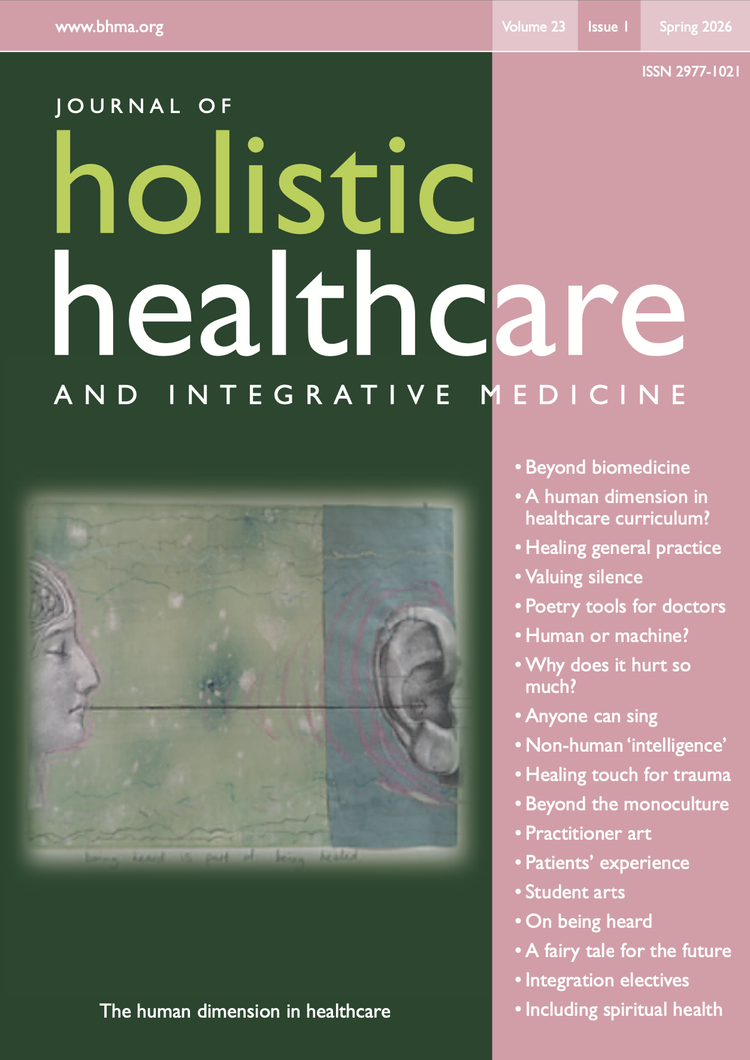
I was finally heard. Every question, every fear, met with patience and care. In being heard, I began to heal. [My artwork ] reflects a simple but powerful idea: when you are a patient, your biggest wish is to be fully heard.” — Abi Macleod (Abi’s art piece is featured on the cover -see next section of the newsletter- of the newest issue of Journal of Holistic Healthcare, Volume 23, Issue 1, Spring 2026. This quote is from her article "Heard”.)
|
|
___________________________________________________________
|
|
New issue of Journal of Holistic Healthcare The Spring 2026 issue of the JHH takes on the theme “The human dimension in healthcare” exploring how holistic approaches can strengthen both patient care and professional wellbeing. Guest co-edited by Louise Younie with Editor-in-Chief Prof David Peters, the editorial introduces the issue with the following words: |
|
|
|
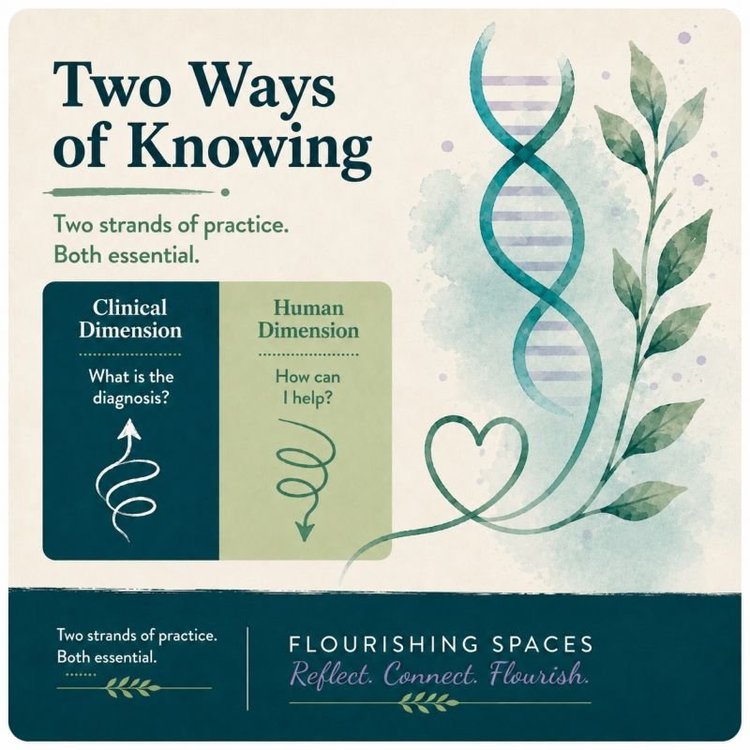
This issue of JHH aims to begin making visible what is often unseen or undervalued in contemporary systems of care. Rather than offering a single definition of the human dimension, we bring together multiple perspectives, from patients, students, clinicians and educators, expressed through narrative, dialogue, image, prose and poetry. In doing so, we hope to illuminate different facets of the human dimension operating at the individual but also the system and ecological levels. This issue touches on our shared humanity in medicine, encountering trauma and suffering, and navigating the emerging presence of artificial intelligence in healthcare. ~~~ One of the many contributions is Dr Sarah Saunders’ poem Bed 4, which exposes how careless language in medical records relating to First Nations people can alienate and diminish our shared humanity. Here are a few words of her poem: alcoholic…malingerer…the gallbladder in bed 4…placement issue… patient…human Click here to read the rest. ~~~ Professor Louise Younie writes on the human dimension in medical education with the following subheadings: Understanding relational determinants of health Valuing lived experience as knowledge Learning for holistic, complex and uncertain practice Protecting spaces where meaning can be made Nurturing the clinician as instrument of care
Within her article, artworks by patient-artist Gavin Blench are accompanied by words from his lived experience:
|
|
Click here to read the full article. ~~~
|
|
Professor Louise Younie also shares about the start of a new blog series exploring the human dimensions of healthcare, which you can read about here. |
|
|
|
|
|
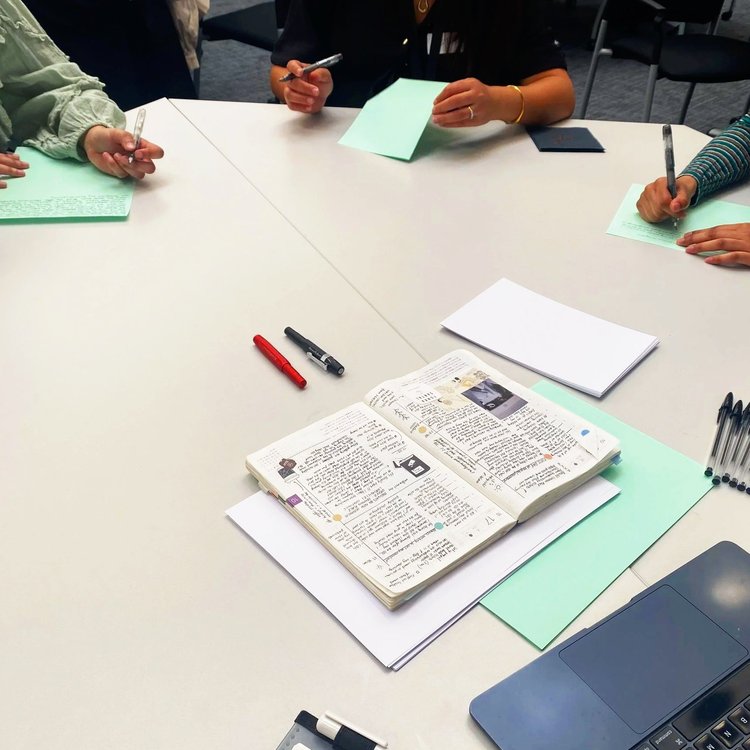
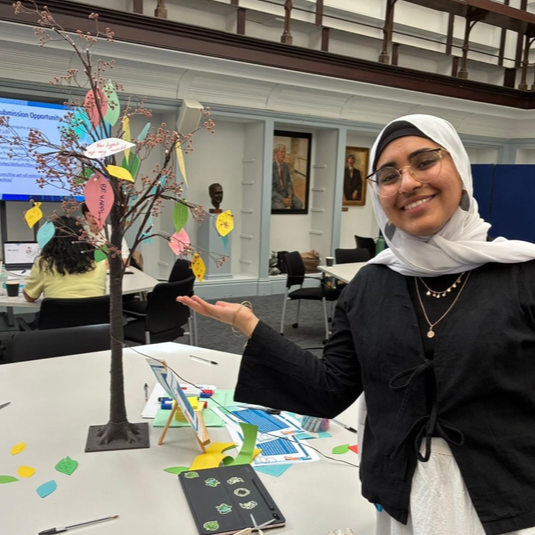
________ Exhibition and workshops for 3rd year medical students The CBME team (primary care education team) at QMUL created a co-creative space, optional due to limited timetabling capacity, for 3rd-year medical students who have been on GP/hospital placements to reflect together and share creative enquiry pieces produced during their GP3 placements. It was an inspiring space for students, including from other years, and staff to connect. Students stated they valued the opportunity and would want more sessions like this, and faculty also enjoyed connecting with students. The communi-tree and journalling stations, led by Adila Bashir (4th year) and Elle Tallgren (5th year) respectively, were highlighted in the feedback as being really enjoyable and informative. We hope to run similar things in future and will work with other faculty members to look at timing/timetabling.
|
|
|
|
Journal workshop by Elle Tallgren
|
|
|
|
|
|
|
|
Communi-tree by Adila Bashir 🌳 |
|
|
|
|
________ Updated news items on Flourishing Spaces website Our newsletter highlights news from the past month, but you can see an archive of events on our website, by clicking this link.
|
INTRODUCING FLOURISHING SPACES TEAM
|
|
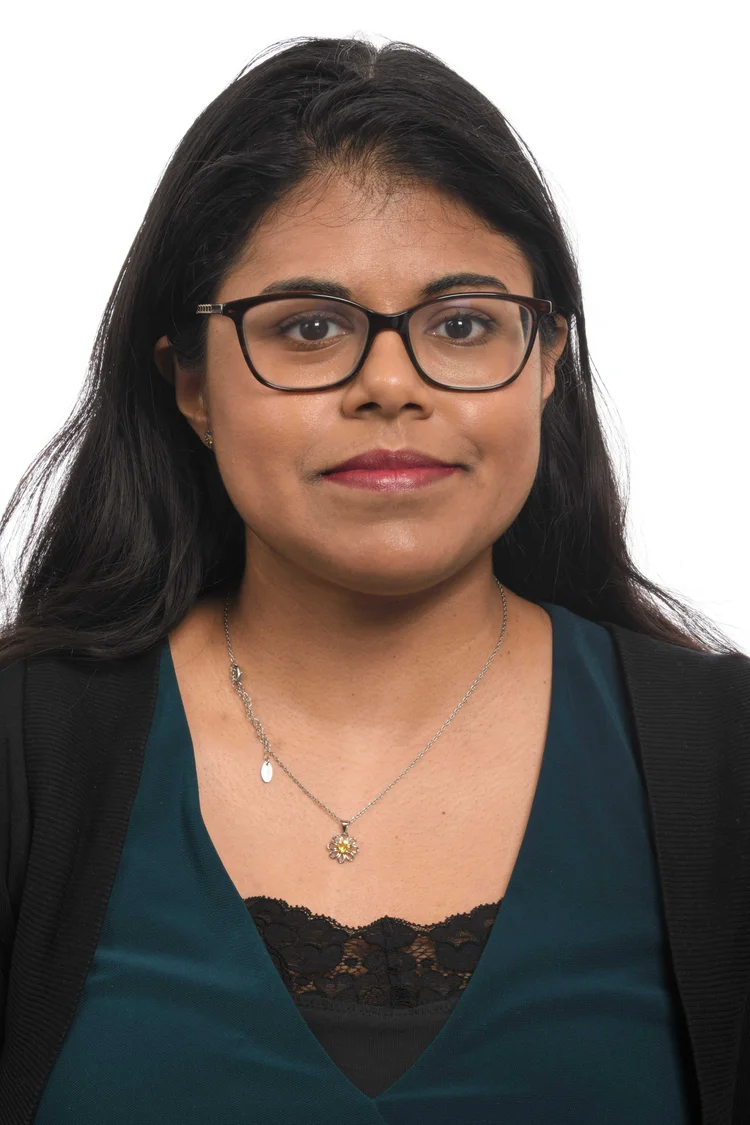
Dr. Agalya Ramanathan Agalya is a GP/educator working across QMUL and Oxford, and has worked in other primary care education teams in London previously. Throughout her time in medical education, she has been interested in supporting inclusive learning environments and belonging in medical students. Over time, she has observed the gaps in teaching around the human dimension, and how valuable this topic is for students to flourish and also to better care for colleagues and patients. |
|
|
|
Outside of work, she enjoys many creative activities, and has found alignment with this way of thinking and medical practice. She is currently working with Louise Younie on creating a human dimension group at Oxford. She has connected with others who are interested in this work, and are optimistic about its impact on future generations of medical students.
|
|
_________ UPCOMING EVENTS_________ 🎟️ 🎭 🩺A theatre production by Shame and Medicine The Hidden Injuries of Medicine, an interactive theatre production exploring shame in healthcare, will take place on Monday 8 June, 2–4pm, at the Midlands Arts Centre, Birmingham. Created by the Shame and Medicine Project in partnership with Geese Theatre Company, the event brings together real stories from patients, medical students and clinicians to examine how shame affects healthcare experiences, professional wellbeing and patient care. The event is free to attend, with advance booking required via the Shame and Medicine Project website. Click here to go directly to booking a ticket. _________ Events by Creative Clinic
|
|
Online Creative Headspace Workshops: The third workshop ed by Katrina Whalley (GP) is due to take place in June. This session offers a creative space to pause, reset, and reconnect. 📅 Date: 15 June 2026 Click on the image below to read more and sign up!
|
|
Compassion by Ruhkia Johnston “This piece explores compassion in primary care through the lens of safety within a team. When people feel safe, they ask questions and also contribute ideas without fear of embarrassment or judgment. We (Ruhkia Johnston, Ruth Garand and Manilla Blomfield) even exercised this in the process of making this piece. The three of us, medical students brought together by our GP placement, sat in the car sharing ideas in a ‘stream of consciousness’ conversation and I simply drew my interpretation of the themes that came up. In our artwork, the brain represents psychological safety. During our placement, we saw this clearly. There was a sense of fluidity, with every member of the team playing an active role, particularly the reception staff, who were essentially the backbone to this mechanism. Their attentiveness and confidence showed us how compassion creates an environment where people feel supported to learn and contribute. The red thread running through the piece is inspired by the East Asian belief of the Red Thread of Fate, symbolising destined human connection. It may stretch or tangle, but it does not break. In our work, it represents the reciprocal nature of compassion and the way it draws people closer. A union of human connection, intertwining the mind and the heart. Personally, this project was especially meaningful because it gave me permission to bring together two worlds I had previously kept separate which were medicine and my art practice. In first year, as someone who sometimes struggled to put pen to paper, being able to submit my painting to express myself was liberating. I was surprised to discover that at Barts, artistic expression has a valued place, offering a beautiful way to reflect on our experiences as budding doctors.”
|
|
After finding out I passed my final medical school exams, I felt a particular kind of unexpected exhaustion~ not relief exactly, but a strange inability to rest. I had spent so long moving toward that finish line that once I crossed it, stillness felt almost unnatural. Instead of stopping, I found myself reaching for the next thing: planning new projects, taking on double amount of work at my part-time jobs, all while convincing myself it is good to “make use” of all this time I have.
|
|
|
|
|
|
|
After some interesting conversations with Dr. Joyce Lee and Prof. Louise Younie, I started to recognise this sea of hyperproductivity I was swimming in, where rest is only justified if it can be framed as useful. In this modern neoliberal world, it feels as if we are taught to treat time like something to optimise, to spend wisely, to never waste. Even leisure becomes another task to make it something curated, useful and “wasting time” starts to feel like failure. I kept thinking about Tomás Aguillar’s writing on leisure, a reading recommendation from my sister. He writes about the kind of morning spent wandering, reading slowly, staring out the window, letting thoughts arrive without forcing them into outcomes. It struck me how difficult that had become, and how necessary. After one Sunday allowing myself to “waste time”, I realised that I hadn’t rested like that in a long while. I found my most creative side on that Sunday. I felt a sense of resistance to the current echoes of society, and a new-found refusal to let every hour be measured by output. I have a lot more to write on this, it has opened a whole new world of exploring how to recognise the sea we swim in, while finding our own flows, away from the mass currents which feel so difficult to resist. Sometimes the most creative thing one can do is nothing, and doing it well. ~ Newsletter editor Elle Tallgren
|
Now it is your turn: This time I encourage you to do nothing but close your laptop, turn off your phone, depending on the device you are reading this on. Sit silently and simply observe the surrounding you are in, notice what thoughts are passing through your mind. That evening of ‘doing nothing’ was a flourishing space. A little piece of grass peeked through a hole in the picnic blanket. |
|
|

|
|
|
“Perhaps the task of education is not simply to produce competent practitioners, but to sustain the conditions in which clinicians and patients may still meet, at least sometimes, as two human beings.” — Professor Louise Younie (From Reclaiming the human dimension in healthcare education, Journal of Holistic Healthcare, Volume 23, Issue 1, Spring 2026) ______________
|
|
If there’s something stirring for you after reading this, or if you simply want to say hello, we’re always here, just email us at creativeenquiry@gmail.com. We will see you again on the last #FlourishingFriday of the month. With warmth, The Flourishing Spaces Team ———————————————————————————— FLOURISHING SPACES
|
|
|
|